
Hormonal Havoc: How Everyday Chemicals in Our Environment Disrupt Women’s Health
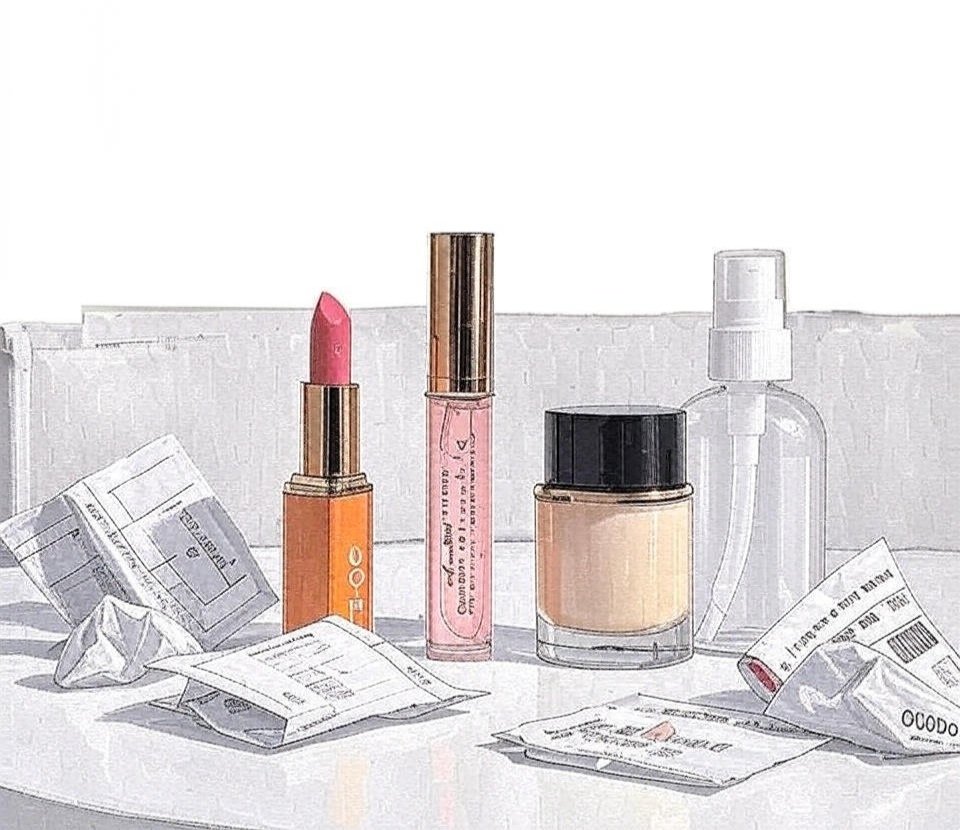
You’re eating well, managing stress, even exercising regularly, yet your hormones still feel out of sync. What if the source isn’t inside your body, but around it?
Healing hormonal imbalances extends beyond internal health—it’s deeply influenced by the environment around us. From skincare products to plastic packaging, we’re constantly exposed to chemicals that can quietly disrupt our hormones, often in ways we’re only beginning to understand. These substances, known as endocrine-disrupting chemicals (EDCs), can mimic or block hormones, interfere with delicate signaling pathways, and contribute to chronic conditions like polycystic ovary syndrome (PCOS), endometriosis, and thyroid dysfunction.
Individual Differences in Environmental Stress Tolerance
Every woman’s ability to handle environmental stressors, including EDCs, varies significantly due to a complex interplay of genetic, epigenetic, metabolic, and lifestyle factors. Research highlights that while some women may tolerate low to moderate chemical exposure without noticeable hormonal issues, others experience significant endocrine disruption even at minimal levels. A study by Gore et al. (2015) in Endocrine Reviews points to genetic polymorphisms in hormone receptors and detoxification pathways as key factors influencing susceptibility. Additionally, age, reproductive status, nutrition, and exposure to multiple stressors can heighten vulnerability (Heindel et al., 2017, Environmental Health Perspectives). Women with pre-existing conditions like PCOS or thyroid disorders may have a lower tolerance, leading to earlier or more severe imbalances (Diamanti-Kandarakis et al., 2009, Fertility and Sterility). This variability underscores the need for personalized strategies to assess and reduce environmental risks to hormonal health.
Let’s explore the evidence and practical steps to minimize your exposure.
Polycystic Ovary Syndrome (PCOS)
PCOS, a prevalent hormonal condition among women of reproductive age, is influenced not only by genetics and lifestyle but also by environmental exposures. Emerging evidence suggests that EDCs play a significant role in its development and severity.
Bisphenol A (BPA): Found in plastic containers, food packaging, and receipts, BPA accumulates at higher levels in women with PCOS. One study revealed a 45% higher BPA concentration in their blood, linked to elevated testosterone and insulin resistance—hallmarks of PCOS.
Per- and Polyfluoroalkyl Substances (PFAS): Known as “forever chemicals” for their persistence, PFAS (e.g., PFOA and PFOS) are associated with a sixfold increased risk of PCOS, even after adjusting for age, race, and BMI, according to North American research.
Heavy Metals (e.g., Cadmium): A 0.1 µg/L increase in blood cadmium levels has been tied to higher testosterone, sex hormone-binding globulin (SHBG), and anti-Müllerian hormone (AMH)—a profile resembling mild PCOS.
Key Takeaway: Chemicals in plastics, industrial pollutants, and heavy metals may worsen PCOS, especially with early-life exposure or combined stressors like obesity or socioeconomic challenges.
Endometriosis
Endometriosis, an estrogen-dependent inflammatory condition characterized by the growth of uterine-like tissue outside the uterus, is increasingly linked to environmental factors. Recent studies mirror findings in PCOS, highlighting plasticizers as key contributors to its development.
BPA & Phthalates: Four of seven human studies found a significant association between BPA levels and surgically confirmed endometriosis. These chemicals affect estrogen signaling, inflammation, and abnormal cell growth, with altered proteins identified in endometriotic tissue.
Meta-Analysis Insight: A review of 22 studies connected BPA, phthalates, cadmium, and lead exposure to increased risks of estrogen-related diseases, including PCOS, endometriosis, and endometrial cancer, with the strongest links to BPA and heavy metals.
Key Takeaway: Plasticizers like BPA and phthalates may synergistically worsen endometriosis by disrupting estrogen signaling and immune responses, highlighting the need to limit exposure to these common environmental chemicals.
Thyroid Dysfunction
The thyroid gland, vital for regulating metabolism and hormonal balance, is highly susceptible to disruption by endocrine-disrupting chemicals (EDCs) found in the environment. Protecting its function is crucial across all life stages, with heightened vulnerability during pregnancy, childhood, and in adults with prolonged exposure or pre-existing conditions.
PFAS Mixture Exposure: A meta-analysis of 16 PFAS compounds showed significant dose-response relationships with thyroid hormone levels (TSH, T3, T4, etc.) in pregnant women, adolescents, and adults. Experimental studies in animals revealed two main mechanisms: disruption of the hypothalamic-pituitary-thyroid axis and direct binding to thyroid hormone receptors.
Bisphenols & Thyroid Function: BPA and other bisphenols (e.g., TCBPA, TBBPA) can bind to thyroid hormone receptors and interfere with hormone synthesis, transport, and metabolism. The effects appear most harmful during early development, suggesting a critical window of vulnerability during pregnancy and childhood.
Key Takeaway: Even minimal exposure to thyroid-disrupting chemicals can have lasting effects on long-term health, with heightened impact during critical early life stages.
What Can You Do to Limit Daily Exposure?
Rethink Personal-Care Products: Many cosmetics and personal-care items (e.g., lotions, shampoos) contain EDCs like parabens, phthalates, and synthetic fragrances, linked to hormonal imbalances. Opt for “fragrance-free,” “paraben-free,” and “phthalate-free” products. Use tools like the EWG Verified™ database to identify safer options.
Minimize Plastic Contact: In many Middle Eastern and Asian homes, it's common to store or reheat food in plastic containers. Switching to glass or stainless-steel containers is a simple way to reduce exposure to endocrine-disrupting chemicals (EDCs). Avoid heating food in plastic, especially those marked with recycling codes #3, #6, and #7.
Filter Water: Use activated-carbon plus reverse-osmosis systems to remove PFAS and pesticides.
Ventilate & Vacuum: Reduce indoor dust, a major source of phthalates.
What Can Policymakers Do?
Individual action matters but policy change is essential for meaningful, long-term protection.
Support Stronger Chemical Regulation: Advocate for the “No Data, No Market” principle, which requires that chemicals be safety-tested before entering the market.
Accelerate the Phase-Out of High-Hazard EDCs: Push for the rapid removal of known endocrine disruptors like BPA from food-contact materials and other consumer products.
TL;DR
Environmental exposures may not be the only cause of hormonal disorders but they are an invisible force too often overlooked. As research continues to uncover strong links between everyday chemicals and conditions like PCOS, endometriosis, and thyroid dysfunction, one thing is clear: knowledge is power. The table below outlines some of the most well-studied EDCs, how they impact hormones, and where they’re commonly found.
| Chemical | Hormonal Impact | Linked Conditions | Common Sources |
|---|---|---|---|
| Bisphenol A (BPA) | Mimics estrogen; disrupts thyroid function; linked to insulin resistance | PCOS, Endometriosis, Thyroid Dysfunction | Plastic bottles and containers, canned food linings, receipts |
| Phthalates | Disrupts estrogen signalling; inflammation pathways | Endometriosis | Fragranced personal products, plastics |
| PFAS (“Forever chemicals”) | Interfere with thyroid hormones; mimic sex hormones | PCOS, Thyroid Dysfunction | Non-stick cookware, waterproof cosmetics, contaminated water |
| Cadmium (Heavy Metal) | Increases testosterone, alters AMH and SHBG | PCOS, Endometriosis | Cigarette smoke, rice, shellfish, batteries |
At Ayla Wellness, we are committed to translating science into real-world action, culturally relevant education, and accessible support for women navigating hormonal imbalances. You deserve answers rooted in science and care that honors your lived experience.
Let’s build safer spaces, inside and out, for our hormones to heal and thrive.
References
Gore AC, Chappell VA, Fenton SE, et al. EDC-2: The Endocrine Society’s Second Scientific Statement on Endocrine-Disrupting Chemicals. Endocr Rev. 2015;36(6):E1-E150. doi:10.1210/er.2015-1010
Heindel JJ, Blumberg B, Cave M, et al. Metabolism disrupting chemicals and metabolic disorders. Environ Health Perspect. 2017;125(8):085001. doi:10.1289/EHP1613
Diamanti-Kandarakis E, Bourguignon JP, Giudice LC, et al. Endocrine-disrupting chemicals: an Endocrine Society scientific statement. Fertil Steril. 2009;92(1):1-16. doi:10.1016/j.fertnstert.2009.05.026
Kandaraki, E., Chatzigeorgiou, A. E., Livadas, S., Palioura, E., Economou, F., Koutsilieris, M., Palimeri, S., Panidis, D., & Diamanti-Kandarakis, E. (2010). Endocrine disruptors and polycystic ovary syndrome (PCOS): Elevated serum levels of bisphenol A in women with PCOS. Endocrine Reviews, 32(1), 156–156. https://doi.org/10.1210/edrv.32.1.zef156a
Kim K, Pollack AZ, Nobles CJ, Sjaarda LA, Zolton JR, Radoc JG, et al. Associations between blood cadmium and endocrine features related to PCOS-phenotypes in healthy women of reproductive age: a prospective cohort study. Environ Health. 2021;20(1). doi: 10.1186/s12940-021-00749-4.
Vagi, S. J., Azziz-Baumgartner, E., Sjödin, A., Calafat, A. M., Dumesic, D., Gonzalez, L., Kato, K., Silva, M. J., Ye, X., & Azziz, R. (2014). Exploring the potential association between brominated diphenyl ethers, polychlorinated biphenyls, organochlorine pesticides, perfluorinated compounds, phthalates, and bisphenol A in polycystic ovary syndrome: A case–control study. BMC Endocrine Disorders, 14(1). https://doi.org/10.1186/1472-6823-14-86
Fuzak MK, Pollack AZ. Examining the Impact of Environmental Non-Persistent Compounds: Phthalates, BPA, and Benzophenone on Endometriosis. Semin Reprod Med. 2024 Dec;42(4):274-287. doi: 10.1055/s-0045-1802986. Epub 2025 Mar 10. PMID: 40064164.
Chitakwa N, Alqudaimi M, Sultan M, Wu D. Plastic-related endocrine disrupting chemicals significantly related to the increased risk of estrogen-dependent diseases in women. Environ Res. 2024 Jul 1;252(Pt 2):118966. doi: 10.1016/j.envres.2024.118966. Epub 2024 Apr 18. PMID: 38640992.
Fan, Z., Maisaidi, R., Reheman, Y., Li, Y., Zhou, P., & Han, L. (2025). Shared molecular mechanisms of bisphenol A and phthalates in endometriosis: A bioinformatics and molecular docking study. Ecotoxicology and Environmental Safety, 299, 118388. https://doi.org/10.1016/j.ecoenv.2025.118388
Chitakwa, N., Alqudaimi, M., Sultan, M., & Wu, D. (2024). Plastic-related endocrine disrupting chemicals significantly related to the increased risk of estrogen‑dependent diseases in women. Environmental Research, 252(Pt 2), 118966. https://doi.org/10.1016/j.envres.2024.118966
Kim, M. J., & Park, Y. J. (2019). Bisphenols and Thyroid Hormone. Endocrinology and metabolism (Seoul, Korea), 34(4), 340–348. https://doi.org/10.3803/EnM.2019.34.4.340
